

Technology
How the chamber works
A walk-in UVC disinfection chamber for stretchers, wheelchairs, mobility equipment and hospital beds that fit the chamber, run as a single enclosed 90-second UVC cycle.
The cycle
What happens inside the chamber
Five steps around one enclosed cycle: ninety seconds of UVC exposure once the lamps have warmed up, with the equipment wheeled in and out by hand.
- 1
Load
Visible debris is removed, then the stretcher, wheelchair, mobility aid or hospital bed that fits the chamber is wheeled into the centre of the chamber. Nothing needs to be dismantled. Where several smaller items go in together, they are spaced so light can reach between them.
- 2
Seal
The operator steps out, the chamber is closed and the panel is switched on with a key. A door interlock confirms the door is shut before the control panel will accept a start, so that the lamps are designed not to strike while the chamber is open.
- 3
Disinfect
One button starts the cycle. After a short lamp warm-up and safety check, banks of germicidal UVC lamps down both side walls expose the item from multiple angles at once for ninety seconds. An emergency stop on the external panel cuts the lamps immediately at any point.
- 4
Check
A light on the panel shows when the cycle has completed rather than been interrupted, so the operator knows the item received a full cycle before it goes back into use.
- 5
Release
The chamber opens and the item is wheeled back out by someone with clean hands or gloves, so it is not recontaminated on the way. There is no drying time, no residue and no airing-off period to wait through.
The prototype
The unit that exists today
A working chamber, built and commissioned. These are photographs of it rather than renders.
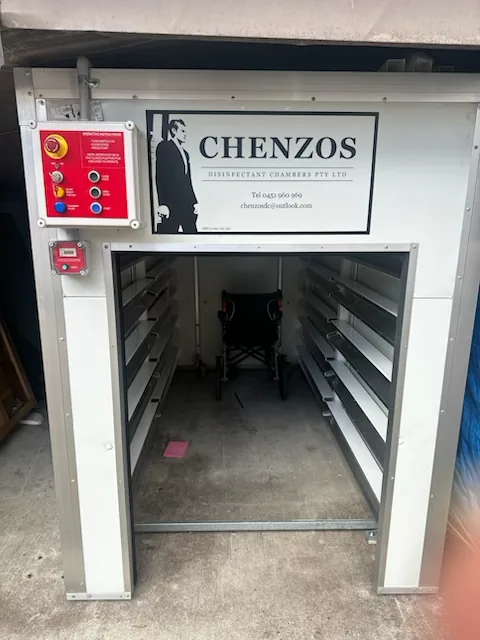
The prototype chamber, open. The control panel sits outside the door — operating instructions, start controls and an emergency stop within reach of the operator. 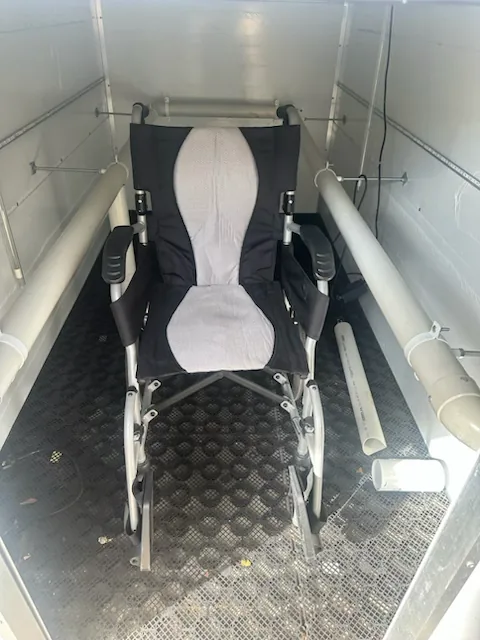
Inside the chamber, part-way through fit-out. An item is loaded so that it stands clear of both side walls rather than against one of them. 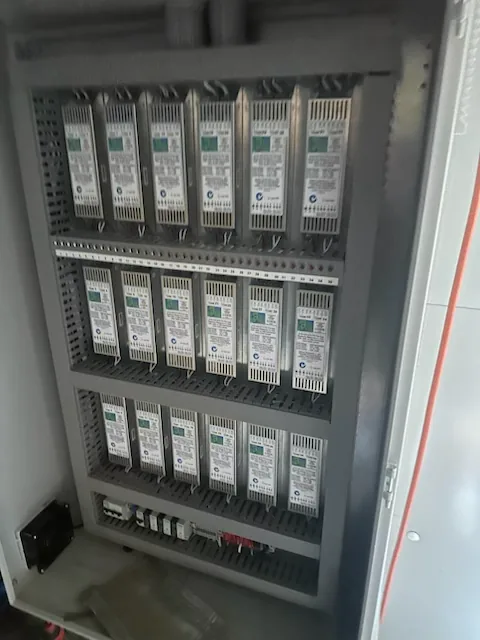
The lamp control gear, in a cabinet separate from the chamber: eighteen drivers on DIN rail above the wiring terminals.
Specifications
Chenzos Model A3
The power figure is the unit’s total draw; the electrical supply is checked for each site at the visit before delivery. Whether a particular hospital bed fits depends on its dimensions in its transport position — send us the model and we will check it for site planning.
| Height | Width | Length | |
|---|---|---|---|
| External | 1,750 | 1,400 | 2,600 |
| Internal chamber | Not stated | 1,280 | 2,480 |
| Door opening | 1,520 | 935 | Not stated |
The door is a roller door on one of the 1,400 mm ends. External length excludes the power box at the rear. The tallest item the chamber takes is set by the door opening.
| Model | A3 |
|---|---|
| Cycle time | 90 seconds, after a short lamp warm-up |
| Lamp type | Germicidal UVC, low-pressure mercury |
| UVC wavelength | 254 nm |
| Lamp replacement | Scheduled by us from the unit’s running-hours counter; included in the lease |
| Operation | Key switch and single-button start, external control panel |
| Safety interlocks | Door interlock and emergency stop, designed to stop the lamps operating while open |
| Load per cycle | One stretcher or hospital bed, two wheelchairs or three walking frames — subject to fit |
| Weight | About 700 kg |
| Total power draw | 2,900 W |
See the chamber run a full cycle
We will show you the prototype run a full cycle, walk through what siting one at your facility involves, and answer the evidence questions your infection-control team will ask. Get in touch and we will arrange a time — we respond within two business days.